Enhanced/Dual Powered
Willem EPROM Programmer
User Guide
Main Board / Cables
Main Board PCB3.5
Main Board PCB4E

Main Board PCB5.0

Main Board PCB5.5C

|
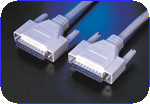
Parallel Data Cable (Printer extension cable, with male-female 25 pin connector, and pin to pin through) |
A-A type USB cable(for power) |
|
|
|
Optional Items:
|
ATMEL 89 Adapter |
ATMEL PLCC 44 Adapter |
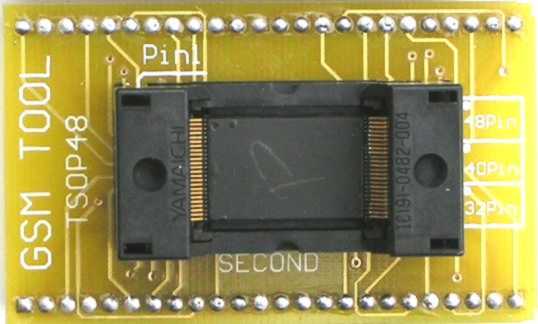
TSOP 48 Adapter |
|
|
|
|
|
FWH/HUB PLCC32Adapter |
PLCC32 Adapter |
SOIC Adapter(Simplified) |
|
On-Board |
On-Board |
|
|
AC or DC Power Adapter (9V or 12V, 200mA) |
SOIC Adapter(Professional) |
|
|
|
|
|
I should also consider if there's a mix-up in the name. Maybe it's not related to Cleo at all. Could it be a typo or a different software? For example, "Cleo Mod Master" isn't a commonly known tool, so maybe it's a hypothetical scenario. The user might want a fictional paper, or maybe they have their own understanding of what it is. I'll proceed under the assumption that it's a real or semi-real tool, perhaps a modding utility for a game, given the "Cleo" part.
Need to check if the user wants references to actual papers or if it's okay to be hypothetical. Since the name isn't standard, I'll proceed with a hypothetical approach, making sure to mention that it's based on existing modding tools and common practices. Cleo Mod Master Version 1.0.12
Including sections like "Introduction" would set the context. The "Functionality Overview" would detail what the software does—like creating mods, scripting, asset management. The "Technical Architecture" could involve how the mod loader works, file formats it supports, scripting languages used. Then practical examples, like creating a mod for a game. Challenges might include compatibility issues, documentation, community support. Future directions could be expanding support to other games or improving tools. I should also consider if there's a mix-up in the name
Hardware Installation & Configuration
|
Installation Steps
(Note: the LPT port of PC MUST set to ECP or ECP+EPP during BIOS setup. To enter the BIOS setting mode, you need press "Del" key or "F1" key during the computer selftest, which is the moment of computer just power up.)
Software Version To Use | |||
| |||
|
| |||
|
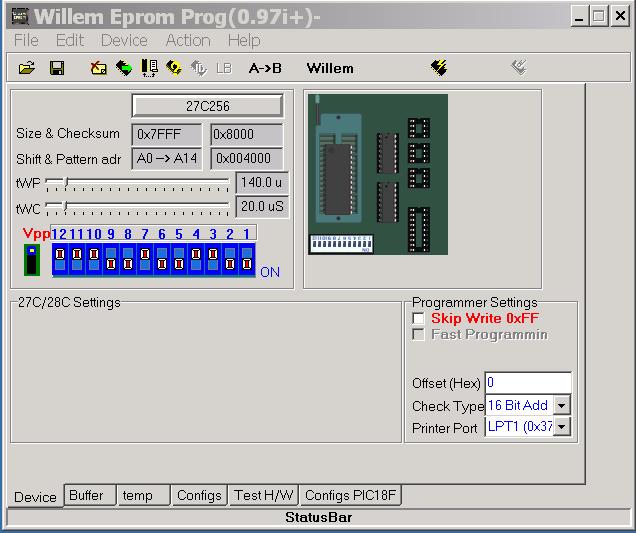
The software interface:
| |||
|
| |||
|
Hardware
Check
| |||
|
PCB3.5/PCB4E
PCB5.0
PCB5.5C
Note: the Vcc setting jumper only has effect when you are using AC adaptor as power source. For the USB power only 5V Vcc is available. For the PCB5.5C, set DIP steps: 1. press DIP Set button twice to check current DIP bit position. Then set it again for ON or OFF. 2. press DIP Bit shift button to shift the DIP bit position to where need to set. And then press DIP Set button twice to check current DIP bit position. Then set it again for ON or OFF. 3. Repeat those steps till all DIP bit ae set same as software indicated. For PCB5.5C voltage and Special chip selection: 1. Put back the safety jumper. 2. Press the voltage button and hold for 1 second, the voltage LED should move to next. Repeat till desired voltage LED light up. 3. Press the chip selection button and hold for 1 second, the chip LED should move to next. Repeat till desired LED light up. 4. Remove the safety jumper to lock the selected voltage and chip selection
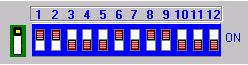
DIP Switch (PCB3.5, PCB5.0)
When programming one chip, follow the program prompt to set DIP switch .
|
I should also consider if there's a mix-up in the name. Maybe it's not related to Cleo at all. Could it be a typo or a different software? For example, "Cleo Mod Master" isn't a commonly known tool, so maybe it's a hypothetical scenario. The user might want a fictional paper, or maybe they have their own understanding of what it is. I'll proceed under the assumption that it's a real or semi-real tool, perhaps a modding utility for a game, given the "Cleo" part.
Need to check if the user wants references to actual papers or if it's okay to be hypothetical. Since the name isn't standard, I'll proceed with a hypothetical approach, making sure to mention that it's based on existing modding tools and common practices.
Including sections like "Introduction" would set the context. The "Functionality Overview" would detail what the software does—like creating mods, scripting, asset management. The "Technical Architecture" could involve how the mod loader works, file formats it supports, scripting languages used. Then practical examples, like creating a mod for a game. Challenges might include compatibility issues, documentation, community support. Future directions could be expanding support to other games or improving tools.