万众期待:全新简谱模式强力上线!
Guitar Pro研发团队深知「简谱」之于中国用户的重要性,在经过几个月的测试和开发,最新的Guitar Pro软件已全面支持简谱功能!会带给您音乐学习和创作的极大便利。
只需直接在五线谱或六线谱上编辑,即可轻松谱写自己的乐章。所有与吉他及其他弦乐器有关的常用音乐符号都可为你所用。
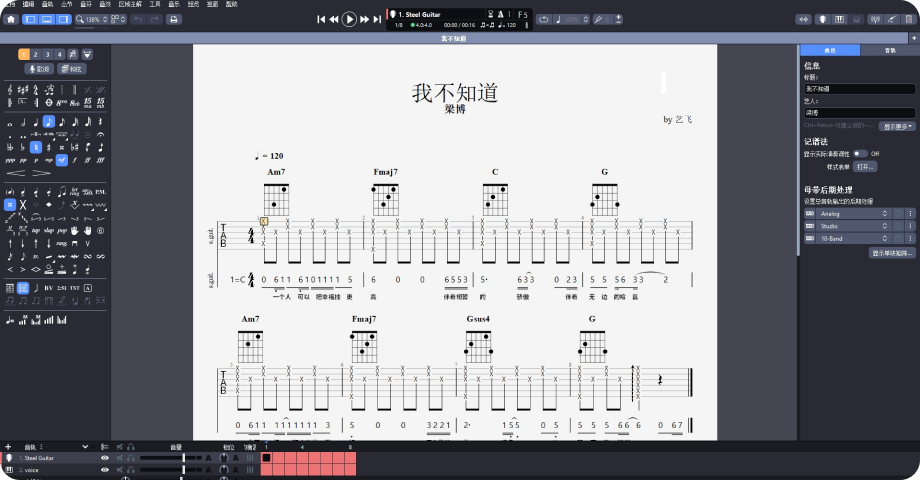
 简谱记谱法支持 NEW
简谱功能的加入使得软件更加贴合国内吉他爱好者的使用习惯,让吉他弹唱谱的制作更加简单和方便。
 自定义您的乐谱
 根据经典或爵士风格,您可以设置70个不同的参数,并完全按照自己的想法调整乐谱的布局,获得出版级的纸质打印输出。
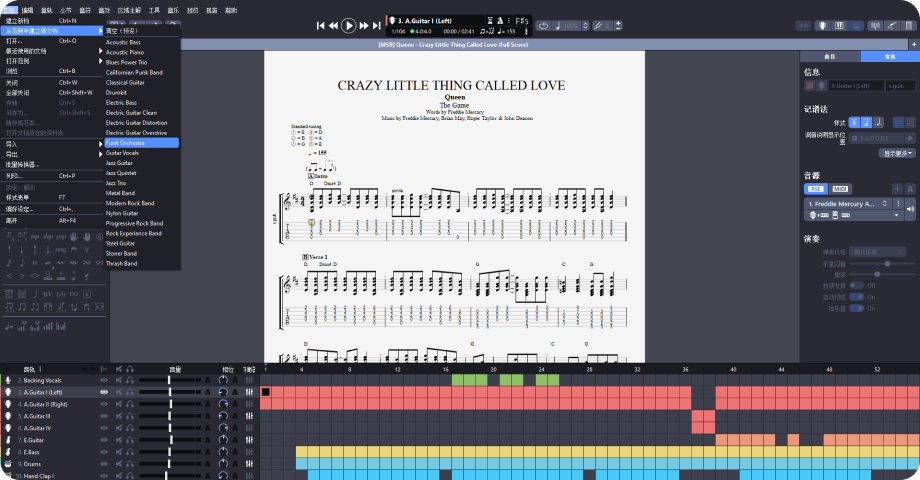
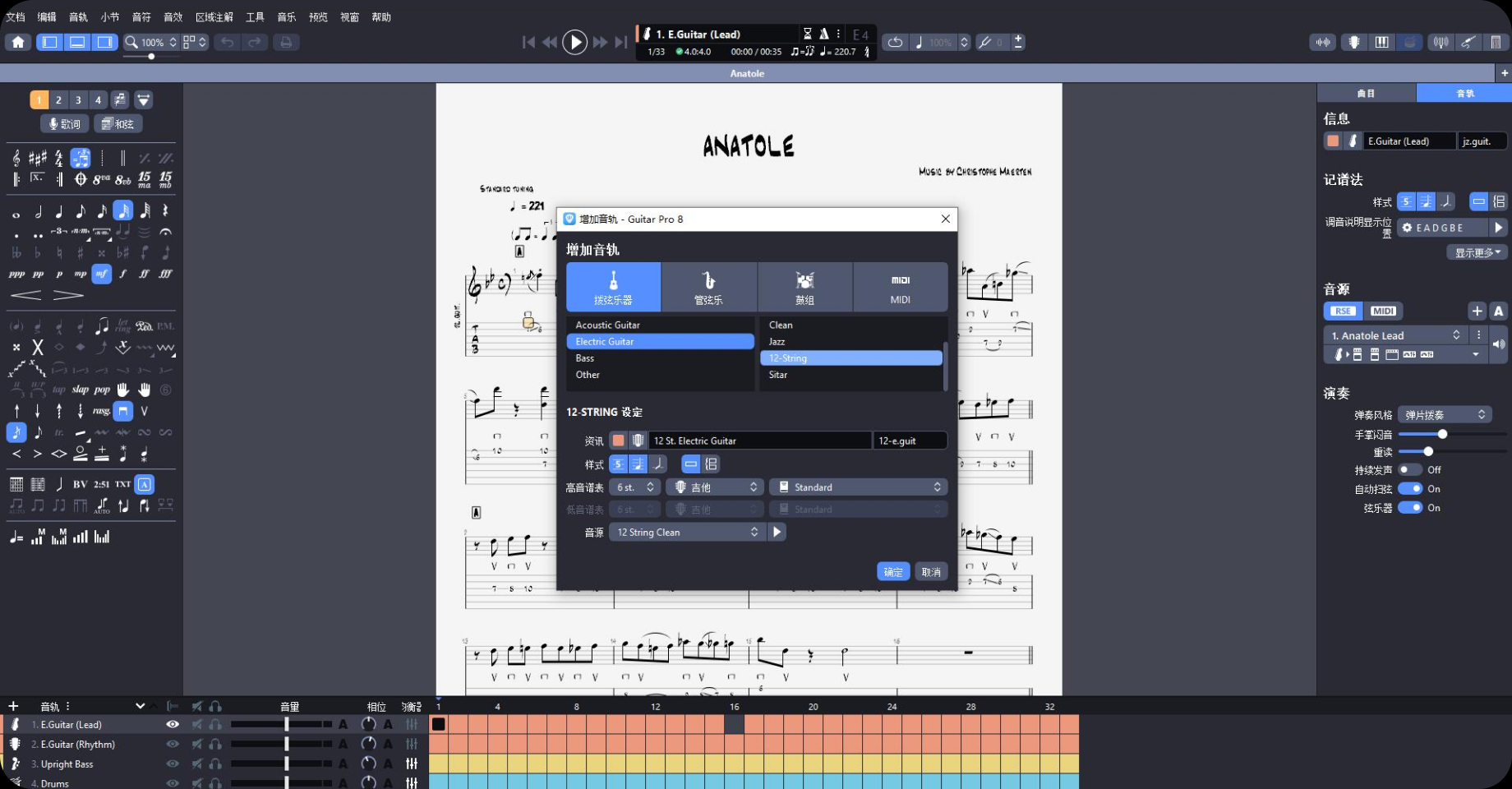
 创建多轨乐谱
 在多轨乐谱下,您可以使用吉他,贝司,尤克里里,鼓,钢琴,人声,弦乐,铜管等数十种乐器创建乐谱。
 记谱法符号
记谱法符号 轻松一点,吉他和其他弦乐器有关的所有常用音乐符号,即可添加到乐谱中。
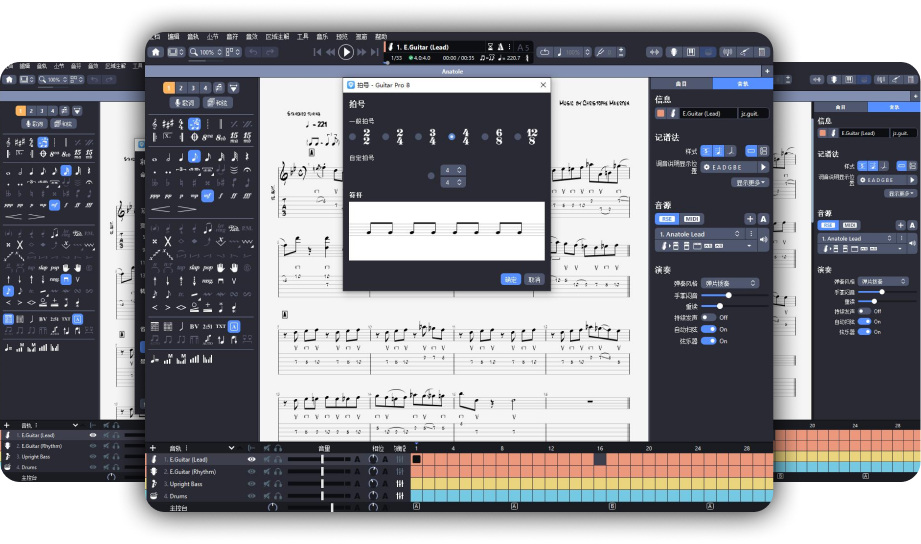
作曲工具,创作得心应手
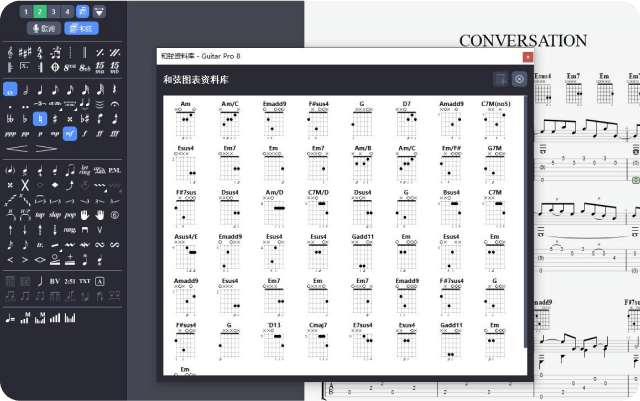
查询任何和弦,Guitar Pro会在指板上显示所有可能的和弦位置。您还可以通过点击和弦网格绘制和弦,看到所有匹配的名字。
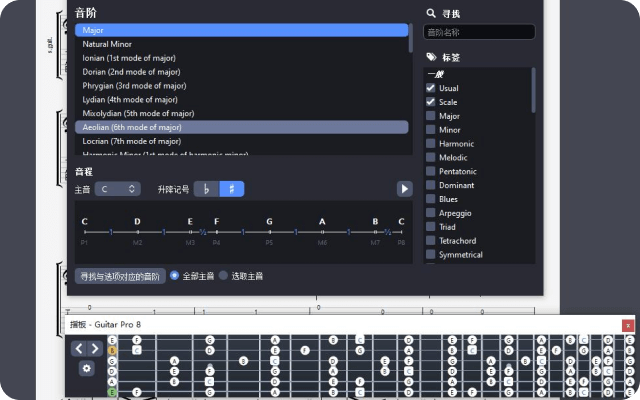
查看和试听丰富的各类音阶。所选音阶可以显示在指板上或钢琴上,帮助您创作歌曲,写独奏或旋律。
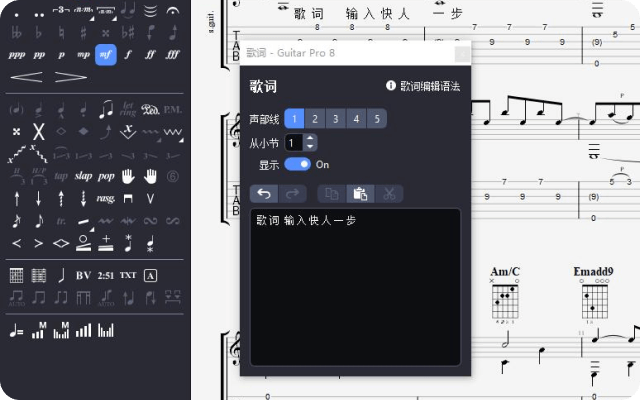
输入歌词后,自动放在音轨的底部。您还可以添加注释来指出 riff(连复段) 或独奏。
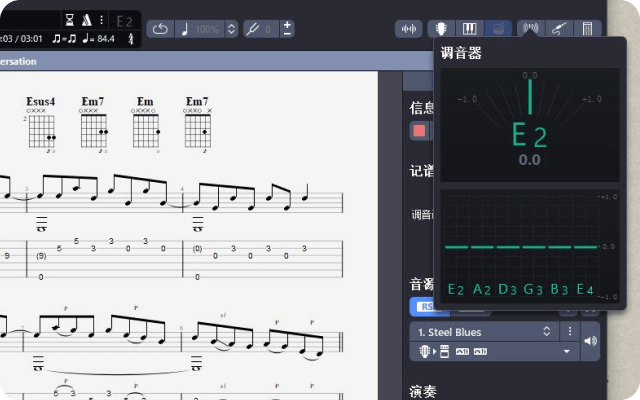
调音器允许您通过麦克风来调整吉他。只需一次扫弦,您就可以了解六根琴弦的音准状态。
直观易用的虚拟乐器
您可以从虚拟乐器的图示中查看和输入音符。它可以显示当前时间的音符,当前小节的音符或选定音阶的音符。
是初学者或打谱爱好者的理想助手。
聆听 Guitar Pro RSE 声音引擎
{{list[isPlay].name}}
 {{list[isPlay].time}}
{{item.name}}
{{item.time}}
Guitar Pro是为
像您这样的音乐家而生的
Posting was not an act of defiance against prudery alone; it was a search for truth in how I looked at myself. I hadn’t expected to learn that the hardest audience is often the one inside your head. Before the post, I catalogued imagined critiques, rehearsed defenses, and lined up excuses. After, the inner critic grew quieter, not silenced, but moved aside by the simple fact that life continued. The world didn’t collapse; people kept scrolling, friends sent messages, and a few others replied with their own tentative confessions.
Would I do it again? Yes — but with a different patience. Now I understand that revealing yourself is not a single dramatic gesture but a series of small choices: who you trust, which parts of yourself you let be public, what you keep sacred. The world will read whatever it wants into the images. But at the end of the day, the most important reader is the one who wakes up each morning and still recognizes the person in the mirror. A Naturistin -183- I Have Posted Some- Naturist...
The responses were a lesson in contrast. Some replies were warm and steady — simple notes of appreciation or a grainy, awkward compliment that still felt human. Others were sharp, a tangle of assumptions: immodest, provocative, indulgent. Both extremes surprised me less than the replies that tried to place me in a neat category — as if pixels could tell motive. The most interesting reactions were the ones that asked nothing at all: quiet likes from strangers, the small, wordless nods that acknowledged presence without judgment. Posting was not an act of defiance against
There’s a peculiar vulnerability in showing your unadorned skin to strangers. Clothes hide more than bodies; they hide stories, doubts, the quiet rules we learn to live by. Without fabric, you become a strange, honest map: where you’ve laughed enough to have lines, where you’ve avoided mirrors, where scars run like quiet narratives. For me, those photos were less about the body and more about the permission to inhabit it without apology. After, the inner critic grew quieter, not silenced,
There’s a tenderness in naturism that public discourse tends to miss. It’s not always about politics or aesthetics — sometimes it’s a careful, almost shy celebration of being free from the itch of comparison. When you remove the costumes of performance, what remains is habit, habit formed by sun and sea and laughter. A hand resting on a hip, hair tangled from wind, a laugh that creased the eyes — those are the details that linger, that make the frame worth more than a moment.
I posted some naturist photos once — not for exhibitionism, not as a bid for attention, but as a small, stubborn assertion of being wholly myself. The images were ordinary: a crooked smile under the sun, feet dug into warm sand, a back freckled with a summer of doing nothing in particular. Still, posting them felt like stepping off a cliff.
产品
支持
关于
广告联盟
联系客服
%!s(int=2026) © %!d(string=Daily Launch)





 400-8765-888