Downloads

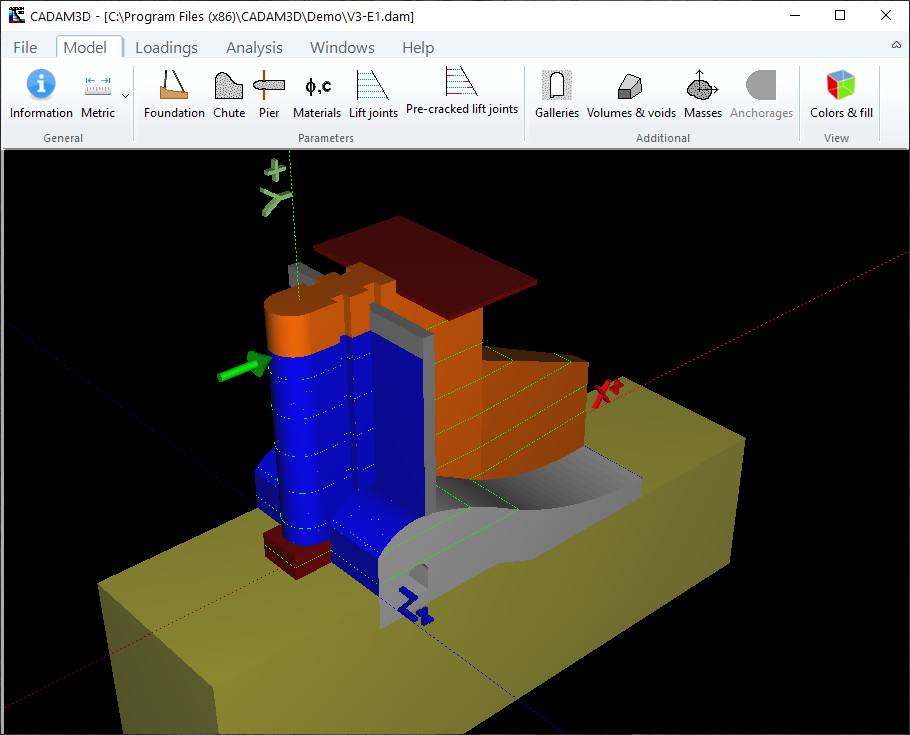
CADAM3D is a user-friendly software based on the gravity method originally developed for one of the world biggest concrete dam owner, Hydro-Quebec, and for Dams and Hydrology of the Quebec Ministry of Environment (Quebec's legislator for dam safety). CADAM3D is fully functional and is intensively used by Hydro-Quebec since 2005. To our knowledge, no other software similar to CADAM3D is available at this time.
If you perform stability analyzes of concrete hydraulic structures, this software will allow you to perform them much faster and more efficiently. If you are interested in this type of software and would like to try CADAM3D for free, please click on the button "Contact us for a free trial of CADAM3D" to send us a message.
Why this ROM still matters A Link to the Past endures because its design is exemplary: labyrinthine dungeons, a melodic score, and an elegant balance of guidance and mystery. The Japanese ROM variants are part of the story of how the game evolved and how players around the world encountered its puzzles. Speedrunners chase precise behaviors found only in certain builds; modders splice and color-change sprites; music communities sample and re-orchestrate its soundtrack. Each CRC is a node in the network of derivative creativity.
Why the “J” matters Region codes matter to players and historians. The Japanese cartridge often differs from Western releases in text, sprite data, or even subtle gameplay behavior; sometimes it contains debugging remnants or alternate translations later changed for global release. For enthusiasts chasing design intent, speedrunners optimizing every frame, or music fans parsing authentic soundtracks, a “J 1.0” ROM is not merely nostalgic — it’s a primary source. a link to the past -j- 1.0 rom with crc 3322effc
The ROM as relic A ROM file is, at first glance, only data: a binary snapshot of the cartridge’s contents. But to those who grew up with cartridge-slot rituals — the satisfying click, the gritty contacts, the ritual blow (mythical though it was) — a ROM is a distilled memory. The CRC value (3322effc) is more than a checksum; it’s a fingerprint that tells collectors and preservationists whether they’re looking at a precise build. Different regions, publisher updates, and later “fixed” releases create dozens of near-identical but distinct versions. That CRC anchors this file in a specific lineage: it is one exact expression of an experience millions have cherished. Why this ROM still matters A Link to
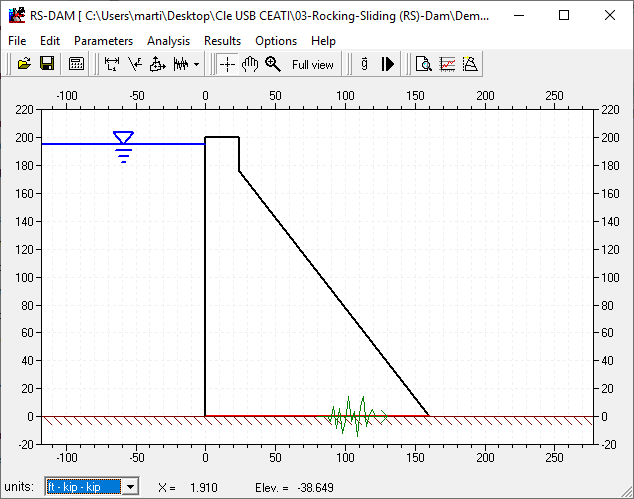
RS-DAM is a computer program that was primarily designed to provide a computational tool to evaluate the transient response of a completely cracked concrete dam section subjected to seismic loads. RS-DAM is also used to support research and development on structural behavior and safety of concrete dams.
RS-DAM is based on rigid body dynamic equilibrium. It performs a transient rocking and/or sliding analysis of a cracked dam section subjected to either base accelerations or time varying forces. Several modelling options have been included to allow users to explore the influence of parameters (e.g. geometry, additional masses, variation of the uplift force upon rotation, hydrodynamic pressures in translation (Westergaard) and rotation, center of rotation moving with sliding, coefficient of restitution of impact, etc...). RS-DAM is developed in a university context and has no commercial aspect.
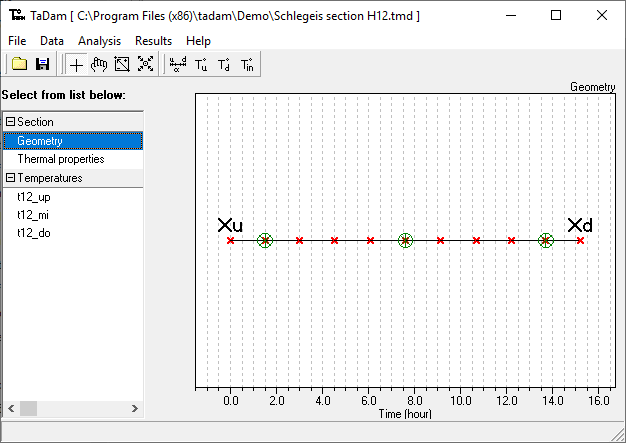
TADAM (Thermal Analysis of concrete DAMs) software employs a new frequency-domain solution technique to solve the 1D thermal transfer problem, allowing the calculation of temperature histories in a concrete dam section.
The direct solution calculates the evolution of the temperature distributions from the temperature histories of the upstream and downstream faces. The inverse solution uses temperature histories, measured inside the section, in order to calculate the temperature fields at the external faces, while taking into account the thermal wave attenuation effects and the phase angles along the section.
TADAM is developed in a university context and has no commercial aspect.